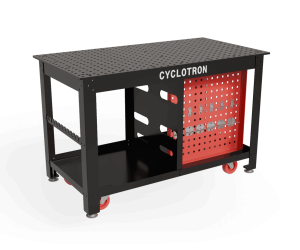
How to select a suitable welding table size?
How to select a suitable welding table size?
A welding table is the foundation of any fabrication setup, but choosing the right size goes beyond available space. Many buyers underestimate their needs and end up with cramped, inefficient workspaces, or overspend on oversized tables that take up valuable shop floor. The right welding table size is vital since it directly influences productivity, accuracy, safety, and your bottom line. Whether you’re a fabrication shop, job shop, or OEM/production unit, selecting the right size can mean the difference between a continuous workflow and constant frustration.
This guide will help you understand the importance of welding table dimensions, how to select suitable welding table size, common pitfalls, and useful advice to ensure your investment delivers maximum value for your specific needs.
Why Welding Table Size Matters in Fabrication
- The size of your welding table is important for more than just fitting your parts. The right table lets you organize your workpieces, tools, and fixtures, which makes your job easier. It also supports your work and helps to improve welding accuracy by reducing distortion.
- A table that fits well in your space makes your work area more comfortable and can help prevent fatigue and mistakes. It keeps materials moving smoothly and helps you avoid crowding or safety problems. Choosing the right welding table size is essential for accuracy, efficiency, and safety.
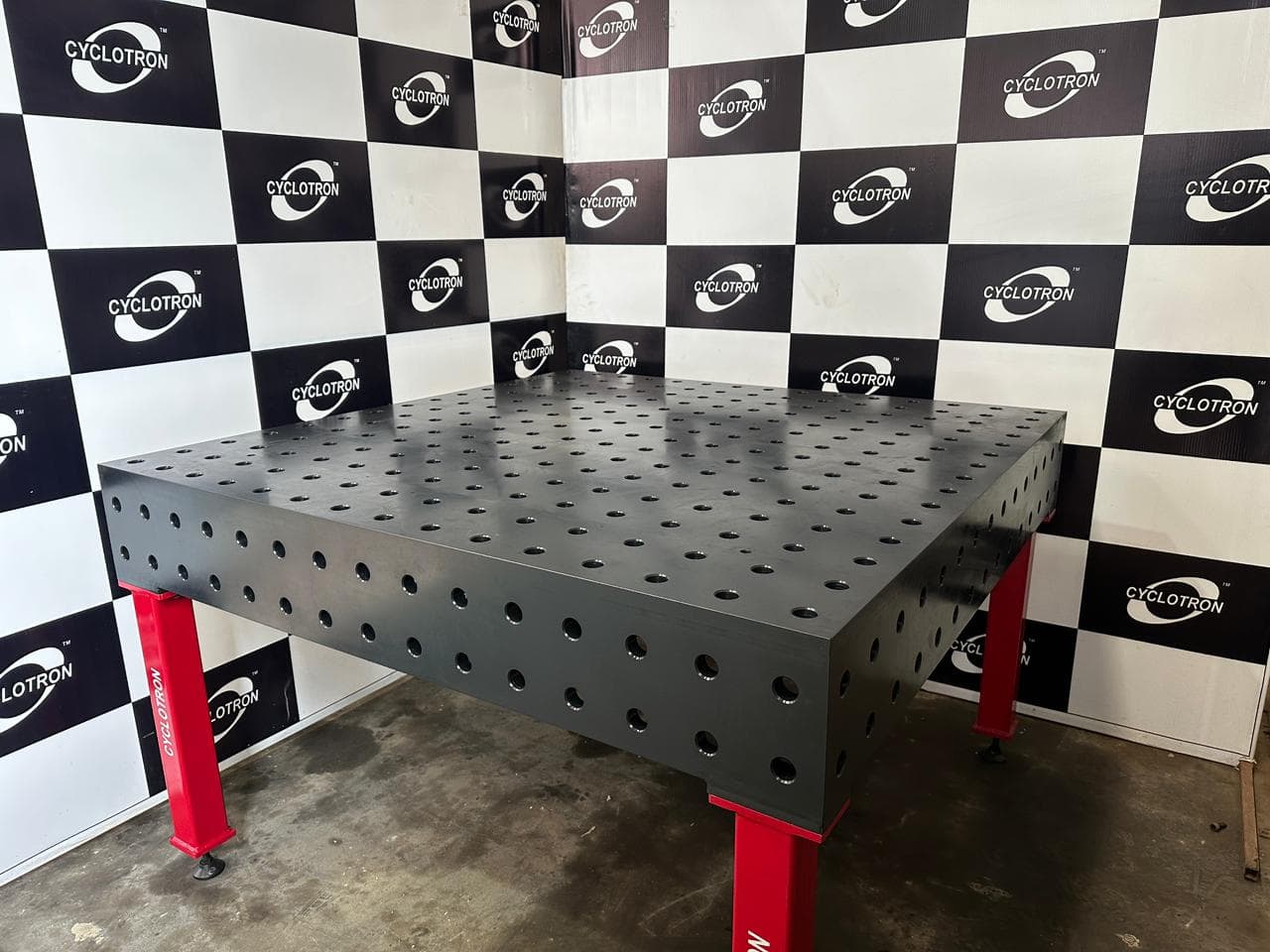
Key Factor to Consider While Selecting a Welding Table Size
Selecting the right welding table size involves more than measuring available space; various essential factors determine what’s truly suitable for your shop and applications.
1. Size of Components to Be Welded
The primary consideration is the maximum length, width, and height of the components you’ll be welding. A rule of thumb: your table should be 20–30% larger than your largest job to provide adequate room for clamping, fixtures, and operator movement.
For example, a welding table for large components should have dimensions that comfortably exceed the size of your workpieces. This is especially important in fabrication, where oversized parts or assemblies are common.
2. Type of Welding Application
Different welding applications require different table footprints. Structural fabrication jobs may require extensive surfaces, while frame or chassis welding requires a rectangular, accessible workspace. Pipe welding frequently benefits from longer tables or specialized rotary tables. Heavy fabrication jobs call for strong, spacious tables. Always match the table size to the type and scale of work you handle most frequently.
3. Load Capacity Requirements
The table’s ability to support the load of your components is as important as its surface area. Assess the heaviest workpieces you’ll handle. The welding table’s load capacity has to account for both static and dynamic loads, including the mass of jigs and fixtures. Uniform load distribution prevents table deflection and guarantees long-term accuracy. For heavy-duty welding tables, look for reinforced construction and top-quality materials.
4. Available Shop Floor Space
Measure your available workspace carefully. Leave enough room around the table for operator movement, clamping, and material handling. Consider the paths for cranes, forklifts, and other equipment; your welding table dimensions should never block these critical routes. Adequate clearance is vital for safety and workflow.
5. Future Job & Expansion Considerations
Think ahead: will your future projects involve larger or more complex components? Export-quality jobs may require bigger, more precise tables. Modular tables offer expansion possibilities, allowing you to add extensions or join tables as your needs grow. Planning for the future ensures your investment remains relevant and valuable.
Common Welding Table Sizes & Their Applications
- Choosing a standard welding table size helps fabricators match their workspace to the job at hand.
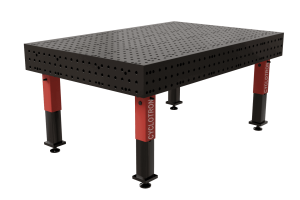
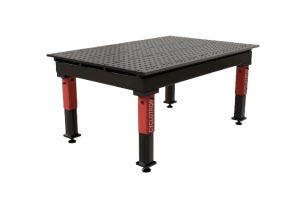
- Welding tables are typically specified by their dimensions in millimeters, which affect the load capacity, part accessibility, and overall productivity. Smaller tables work well for light fabrication and maintenance, especially when space is tight. Medium-sized tables are common in most job shops that handle a variety of parts.
- Large tables are best for building frames, structural assemblies, and repetitive production, providing the steadiness and exactness needed for welding. For heavy-duty or export projects, oversized or custom tables are necessary to fit large parts and complex setups. Knowing these typical sizes helps shops, OEMs, and production teams pick a table that fits their space, budget, and future needs without sacrificing safety or precision.
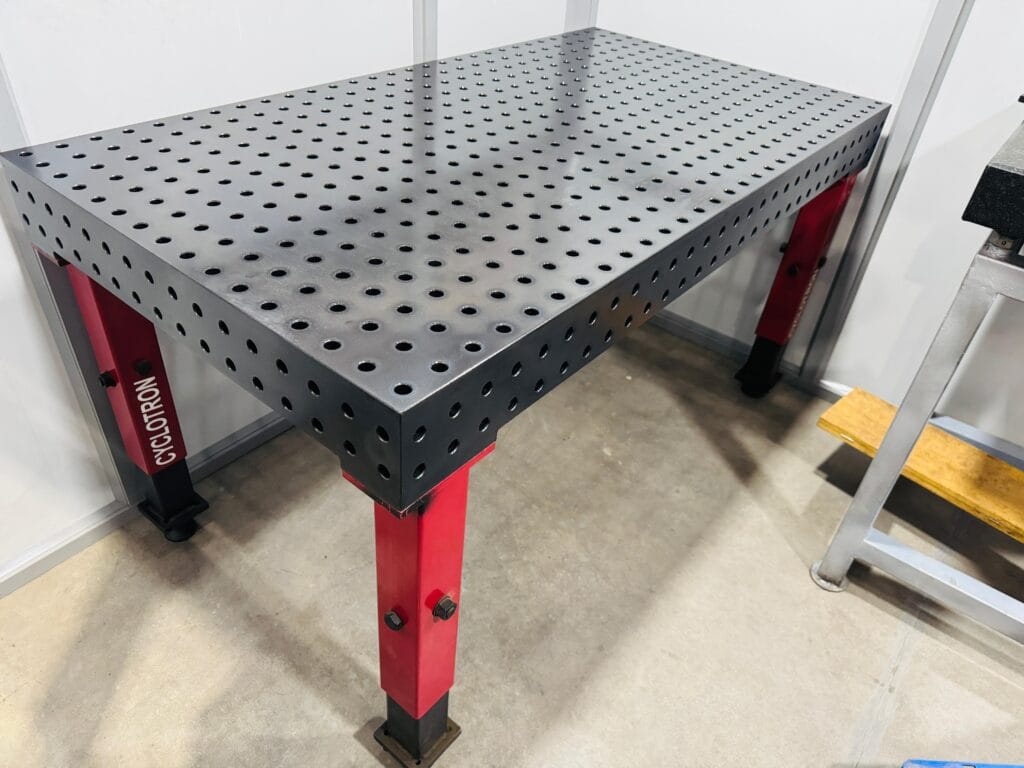
| Welding Table Size (mm) | Typical Application |
|---|---|
| 1200 × 800 mm | Small fabrication & repair work |
| 1500 × 1000 mm | General job shop fabrication |
| 2000 × 1000 mm | Frames, brackets & structural assemblies |
| 2400 × 1200 mm or 1500 x 3000 mm | Heavy fabrication and large components |
| Custom Sizes | Large-scale projects & export-oriented jobs |
Selecting Welding Table Size for Different Applications
- Job Shops: Medium-sized modular tables offer flexibility and can be expanded with extensions.
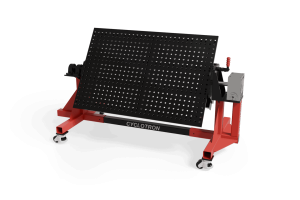
- Pipe Welding: Longer tables or rotary tables are ideal for supporting pipes during fabrication.
- Heavy Fabrication: Large surface areas and high load capacity are essential for handling oversized components.
- Precision Jobs: Smaller, flatter tables provide the accuracy required for detailed work and small assemblies.
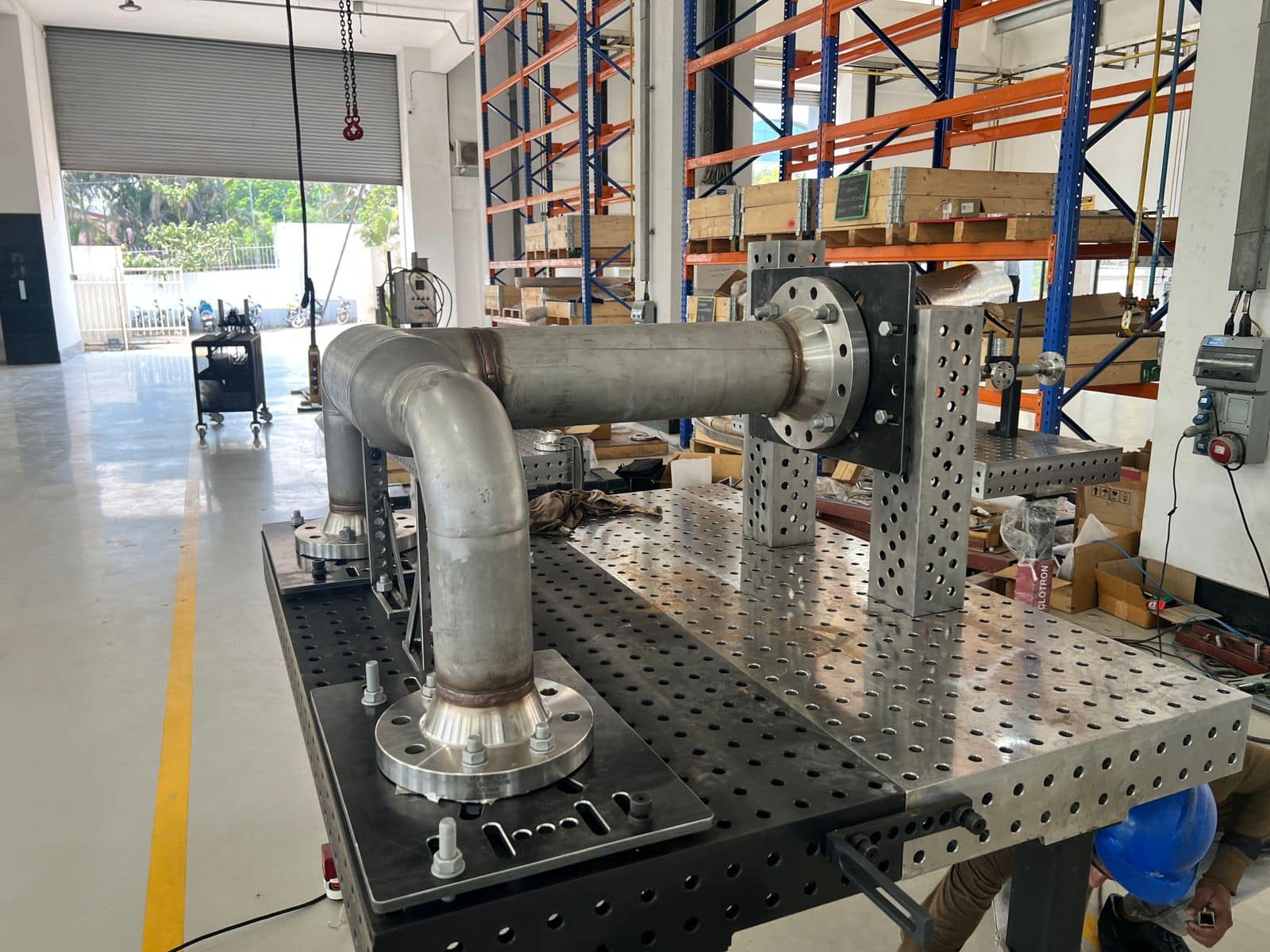
Key Factor to Consider While Selecting a Welding Table Size
Here are the common serious mistakes while choosing a Welding table size:
- Selecting solely on price, ignoring functional needs
- Overlooking future job requirements
- Underestimating the load and risking table deflection
- Not considering ergonomics and operator comfort
- Failing to allow space for fixtures and clamps
Avoiding these pitfalls will help you choose a welding table that supports both your current and future operations.
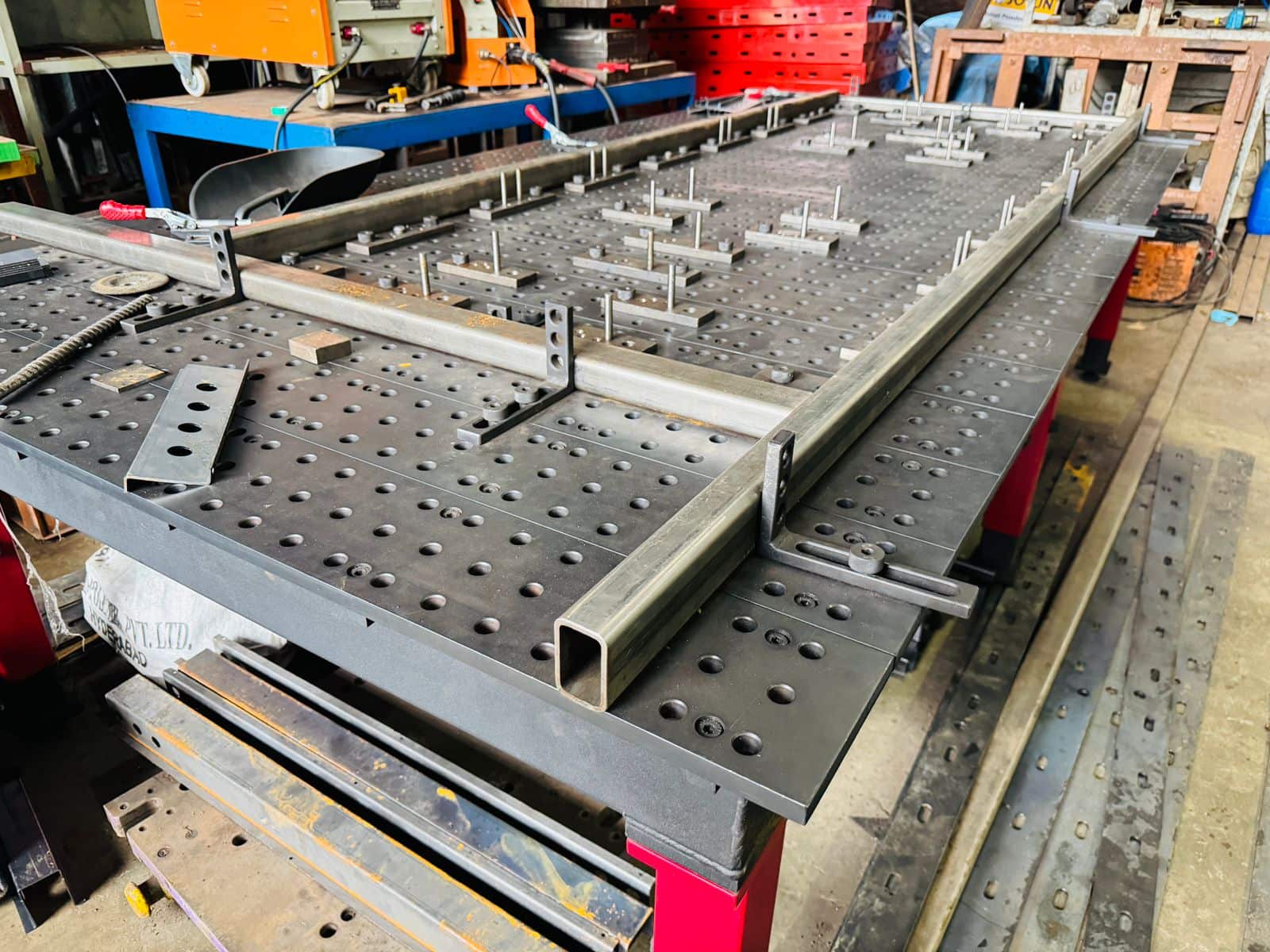
How Cyclotron Helps You Choose the Right Welding Table Size
- Application-based Recommendation: Cyclotron guides you in choosing the ideal welding table size selection based on your specific fabrication requirements and workflow. Our experts recommend table sizes that optimize productivity for your particular applications.
- Custom Sizes Available: If standard sizes don’t meet your needs, Cyclotron offers custom welding tables tailored to your workspace and project requirements. This ensures a perfect fit for any operation, large or small.
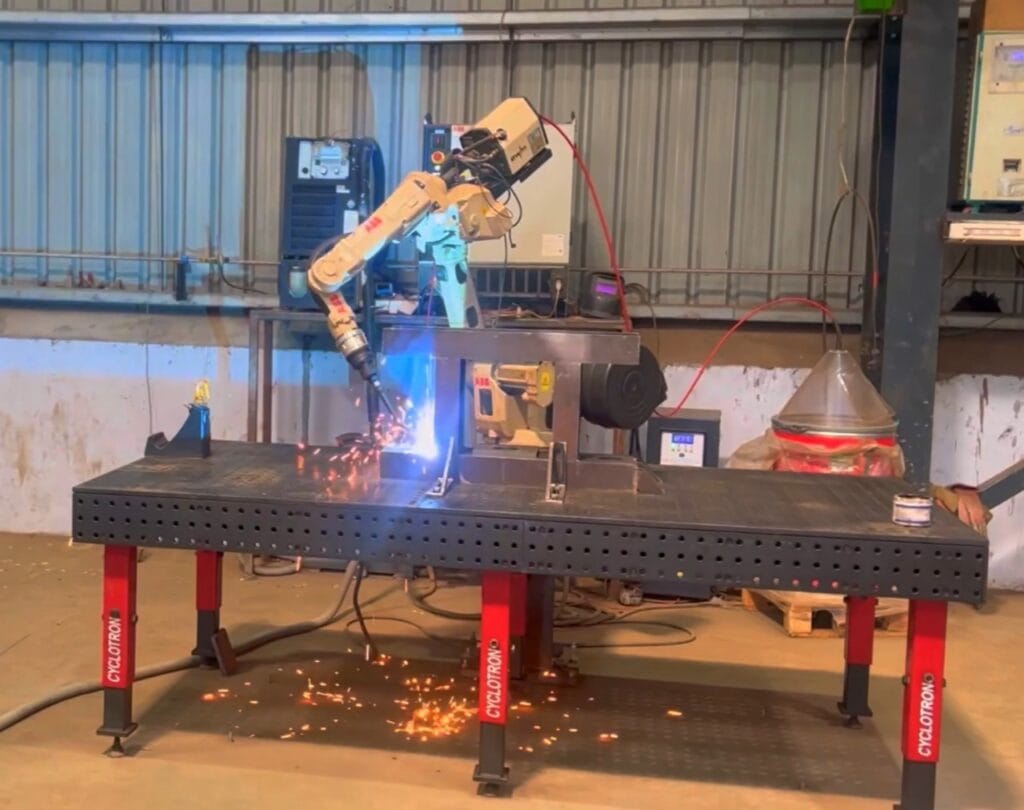
- Designed for Toughest Fabrication Conditions: Our welding tables are built to withstand the unique challenges of toughest fabrication environments, delivering strength, reliability, and durability in every table. Selecting the right welding table size ensures higher productivity and long-term value.
How to choose a suitable welding table?
There are plenty of things while considering a suitable fixture table for YOU. It could start from what should be the size? Should it be 3D, 2D, Rotary, or slotted table? What should be the thickness?
Benefits of Rotary welding table
The use of rotary welding tables in the manufacturing industry has drastically increased due to the increase in production rate, better welding quality, greater Business ROI, and many more.
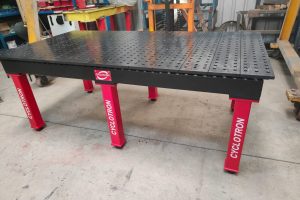
Types of Welding tables
Most of the welders perform all the fabrication work on the floor. One can work on the shop floor without a welding table. No grounding needed, no worry about cutting the base etc.
Our Products